

NFC Labels and Stickers
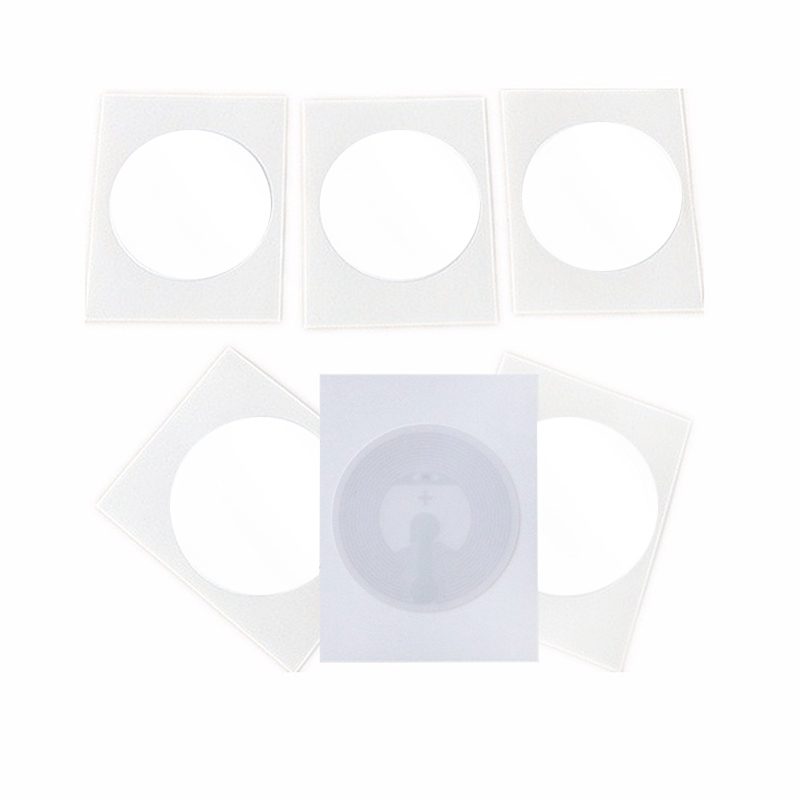
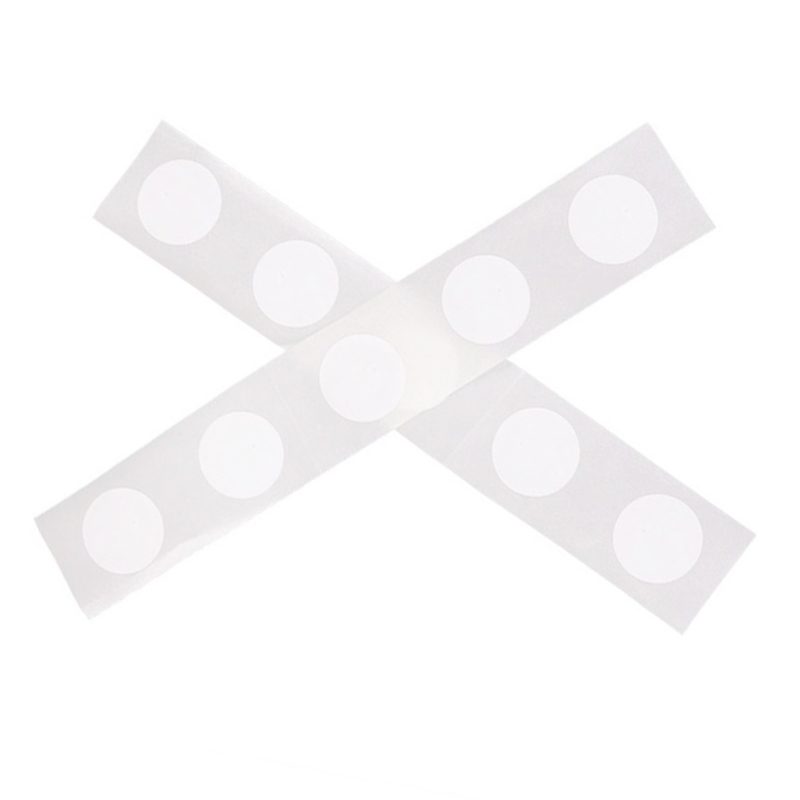
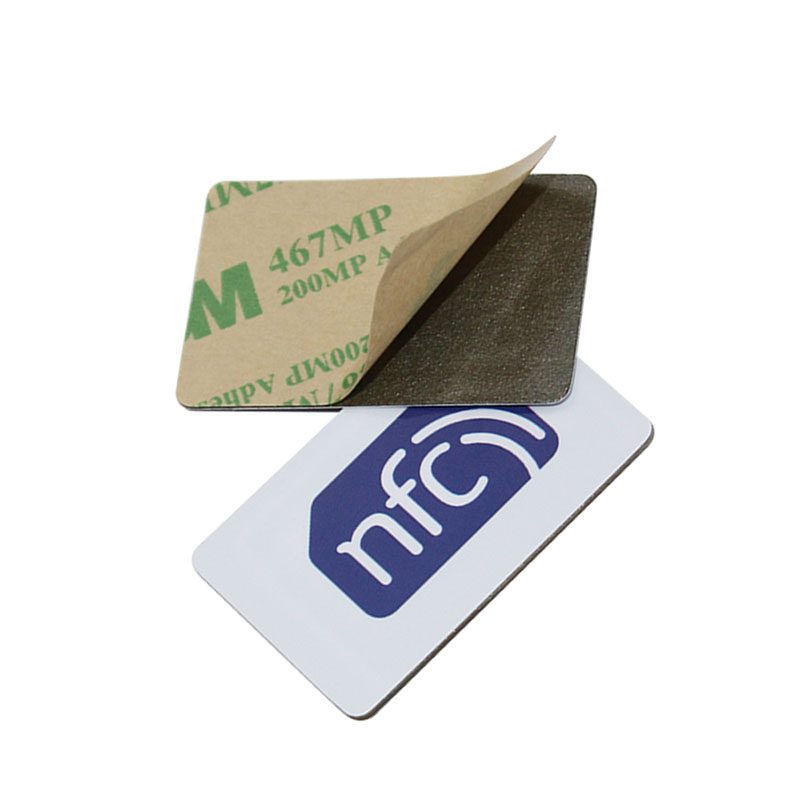
Printable NFC labels and stickers with NXP NTAG21x and MIFARE 1K chips - in paper, PET, PVC and anti-metal versions. Supplied blank or full-colour printed, die-cut to shape, with 3M adhesive and chip encoding on request.
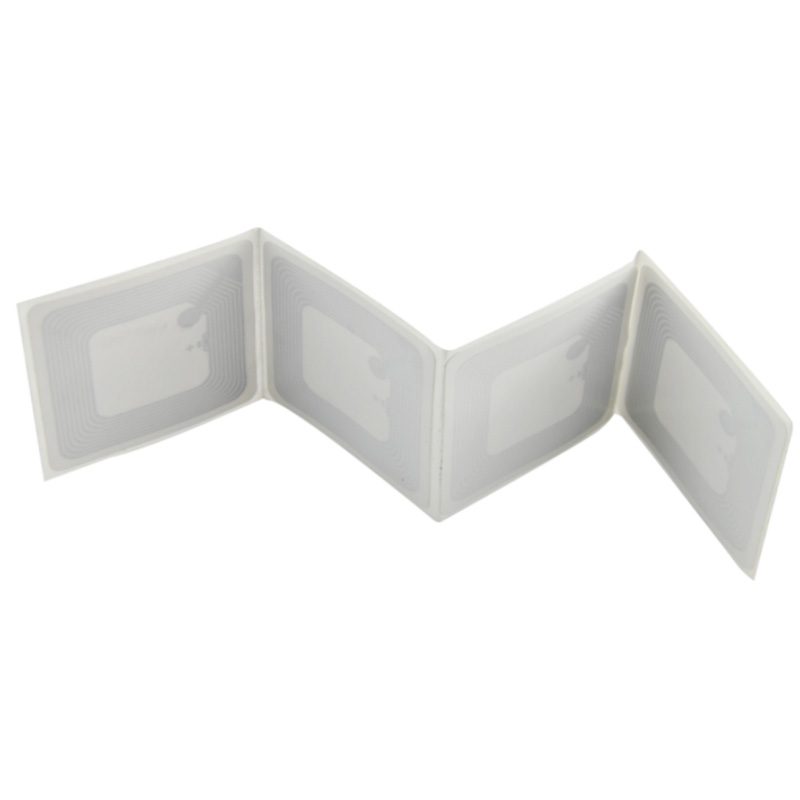
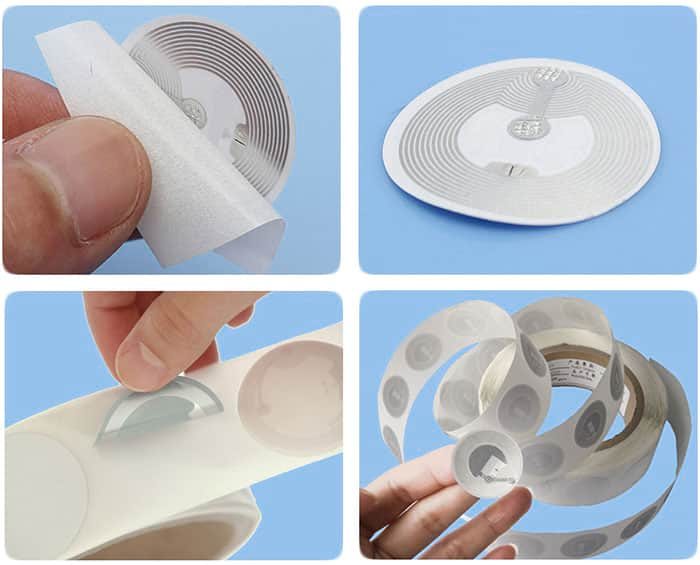
An NFC label is a thin adhesive tag with a chip and a small antenna laminated between two layers of material. Tap it with a phone and it opens a link, shares a contact, verifies a product or logs a visitor in. Because the tag is only millimetres thick it can be stuck onto almost any surface - paper, plastic, glass, wood, a bottle cap, a piece of clothing or a metal machine part - without changing the look of the product.
We build labels around two chip families. The NTAG21x series - NTAG213, NTAG215 and NTAG216 - is the NFC Forum Type 2 Tag workhorse, with 144, 504 or 888 bytes of user memory and no app required to read it. The MIFARE 1K chip is the classic ISO/IEC 14443A option when a customer already has a reader and credential system in place. The label body then decides the rest: coated paper for the cheapest unit, PET for waterproof and heat resistance, PVC for outdoor durability, and an anti-metal version with a ferrite layer for equipment and vehicles.
Every label can be supplied blank, ready for your own printing, or printed by us in full colour with your artwork, logo or QR code. Die-cutting to any outline is standard, the adhesive can be standard double-sided or 3M, and we can write the chip and encode the NDEF record before the labels are packed. The minimum order is 1000 pieces. All products are manufactured to your specifications. Sizes, materials, chips and printing options can be fully customized.
| Chip Options |
|
|---|---|
| NFC Forum Type | Type 2 Tag for NTAG21x, Type 2 Tag for MIFARE Classic 1K |
| Operating Frequency | 13.56 MHz (HF) |
| Communication Standard | ISO/IEC 14443A, NFC Forum Type 2 Tag compliant |
| Data Rate | 106 kbit/s |
| Input Capacitance | 50 pF |
| Data Retention | 10 years |
| Read Range | 2-5 cm on a phone, up to 100 mm with a reader, depending on antenna size and reader power |
| Common Sizes |
|
| Die-Cut Size | Custom shape per drawing, minimum 4 mm larger than the antenna inlay |
| Label Material |
|
| Adhesive |
|
| Printing | Full-colour offset printing, silk-screen printing, digital printing |
| Surface Finishes |
|
| Decoration Options |
|
| Die-Cutting | Free die-cut to any shape, minimum 4 mm larger than the inlay |
| Encoding | NDEF URL, text, vCard or UID record written to the chip before packing |
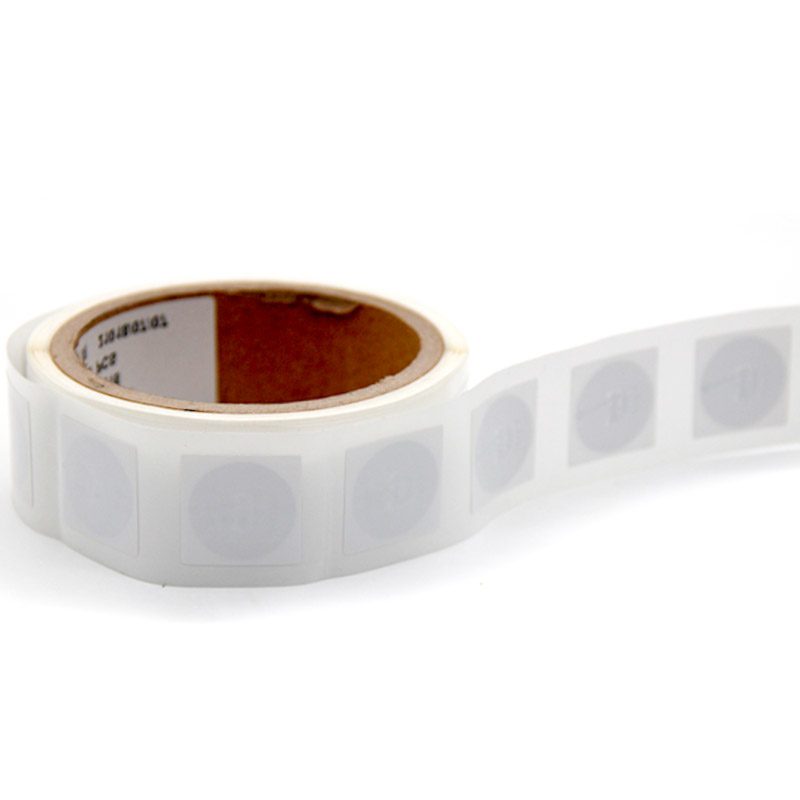
| Packaging | 1,000 / 2,000 / 5,000 pcs per roll, 10,000 / 50,000 / 100,000 pcs per carton |
| Shipping | 3 days by DHL / FedEx / UPS, 10 days by air, 18 days by sea |
| Production Time | 7-10 working days for 1-50,000 pcs, with or without encoding |
| Sampling | Free 3-5 pcs stock sample, freight paid by buyer |
Choosing the Right Chip and Label Body
NTAG213, NTAG215 and NTAG216 share the same NTAG21x family and the same command set, so they read identically on any phone and differ only in how much data they can hold. NTAG213 with 144 bytes is enough for a short link or a plain URL record, which covers a review sticker or a table tent. NTAG215 with 504 bytes is the usual choice for a vCard, Wi-Fi credentials or a tracked URL, and it is also the tag most often fitted to loyalty cards. NTAG216 with 888 bytes takes multi-record smart posters and payloads you expect to grow. MIFARE Classic 1K is the pick when the customer already runs MIFARE readers and access credentials, because it keeps that ecosystem intact. The label body is the second decision: coated paper for the lowest unit cost, PET where the label has to survive water and heat, PVC for outdoor use, and the anti-metal version with a ferrite layer when the tag is stuck onto equipment, vehicles or metal packaging.
Materials, Adhesives and Surface Finishes
The inlay is sandwiched between the top material and the adhesive, and the choice of top material decides how the label feels and how it prints. Coated paper is cheap and takes ordinary commercial printing. PET is waterproof, heat resistant and recyclable. PVC gives the toughest, most weather-resistant surface and is available as a soft or rigid film. On the adhesive side, standard double-sided glue is robust and economical, 3M glue costs more but holds better across temperature changes and resists corrosion, and electrostatic adhesive is used where static electricity on the line is a concern. Surface finishes are frosted, glossy, matt or laminated, and the decoration options - laser numbering, embossing, a scratch-off panel, a signature panel, a barcode and spray numbering - are applied on top of that finish.
Printing and Die-Cutting
Labels are printed in full colour by offset, silk-screen or digital process, so your logo, artwork and QR code come out sharp on both the face and the reverse. Die-cutting is free and to any outline you supply, whether that is a circle, a rounded rectangle or a custom silhouette. The only rule is that the cut line must sit at least 4 mm outside the antenna inlay, otherwise the antenna is damaged and the read range collapses. We can also add barcode, serial numbering, signature panels and security scratch fields to individual labels in a run.
Encoding and Quality Control
Encoding is part of the order rather than an afterthought. We write your NDEF URL, text record, vCard or UID into the chip, then read the memory back to confirm the payload is correct, and only then the labels are rolled and packed. Every batch passes a check on antenna impedance and read distance before it leaves the line, and the labels are packed in rolls of 1,000, 2,000 or 5,000 pieces, with 10,000, 50,000 or 100,000 pieces to a carton for bulk programmes.
MOQ, Samples and Delivery
The minimum order is 1000 pieces and the same production line applies from there. Standard production runs 7 to 10 working days for quantities up to 50,000 pieces, with or without encoding. Shipping is 3 days by DHL, FedEx or UPS, 10 days by air or 18 days by sea. We keep 3 to 5 stock samples on hand and send them free of charge, with only the freight payable by the buyer, and we can sign a non-disclosure agreement for long-term partners.
NFC Label Chip Options Compared
Both chip families work on the same 13.56 MHz radio and the same ISO/IEC 14443A protocol, and both are read by any NFC phone without an app. The difference is memory, security and ecosystem: NTAG21x is designed for writing a link or a record and reading it back, while MIFARE Classic 1K is the classic choice when an existing reader and access system has to stay in place.
| Feature | NTAG213 | NTAG215 | NTAG216 | MIFARE Classic 1K |
|---|---|---|---|---|
| User memory | 144 bytes | 504 bytes | 888 bytes | 1 KB |
| Total memory | 180 bytes | 540 bytes | 924 bytes | 1 KB |
| Protocol | ISO/IEC 14443A | ISO/IEC 14443A | ISO/IEC 14443A | ISO/IEC 14443A |
| Operating frequency | 13.56 MHz | 13.56 MHz | 13.56 MHz | 13.56 MHz |
| Data rate | 106 kbit/s | 106 kbit/s | 106 kbit/s | 106 kbit/s |
| Security | 32-bit password, lock bits, ECC signature | 32-bit password, lock bits, ECC signature | 32-bit password, lock bits, ECC signature | Sector-based access keys |
| Read range | 2-5 cm on a phone | 2-5 cm on a phone | 2-5 cm on a phone | 2-5 cm on a phone, up to 100 mm with a reader |
| Best for | Short URLs, review taps, table labels | vCards, Wi-Fi login, loyalty and product pairing | Multi-record smart posters and long payloads | Access control, loyalty programmes with existing readers |
Product Gallery
More in This Category
NFC Stands
Countertop NFC stands for tap-to-review and social-media signage - L-shape PVC, acrylic, wooden and base-mounted stands with NXP NTAG chips for shops, restaurants and small businesses.
Learn more →NFC Plates
Rugged on-metal NFC plates for industrial equipment, vehicles and outdoor installations with strong adhesives.
Learn more →Custom NTAG NFC Cards
Custom printed NFC cards built around NXP NTAG chips - NTAG213, NTAG215, NTAG216 and NTAG424 DNA - in PVC, PET, wood and metal. Supplied blank or fully branded with your logo, QR code and encoded NDEF link for tap-to-review, loyalty and product authentication.
Learn more →Applications
- Tap-to-review and customer feedback cards
- Product authentication and anti-counterfeit labels
- Smart packaging and product pairing
- Social media follow and share stickers
- Loyalty and membership stickers
- Library, museum and asset management
- Animal tracking and product identification
- Menu, poster and information labels
Frequently Asked Questions
What is the minimum order quantity for custom NFC labels?
The minimum order is 1000 pieces. From 1000 pieces upward the same printing, die-cutting, inlay embedding and read-back inspection line is used, so small and large runs are made to the same standard.
How long does production and delivery take?
Standard production takes 7 to 10 working days for quantities from 1 to 50,000 pieces, with or without encoding. Shipping is 3 days by DHL, FedEx or UPS, 10 days by air or 18 days by sea.
Which chips can you fit into the labels?
We fit NXP NTAG213 with 144 bytes of user memory, NTAG215 with 504 bytes, NTAG216 with 888 bytes, and MIFARE Classic 1K with 1 KB. All of them are genuine NXP parts on 13.56 MHz, ISO/IEC 14443A, and read on any NFC phone without an app.
What materials and adhesives are available?
The label body can be coated paper, PET, soft PVC or an anti-metal version with a ferrite layer. The adhesive is standard double-sided, 3M or electrostatic. Surface finishes cover frosted, glossy, matt and laminated, and the decoration options are laser numbering, embossing, scratch-off panels, signature panels, barcodes and spray numbering.
Can you die-cut the labels to a custom shape?
Yes, die-cutting to your own outline is free. The only constraint is that the cut line must be at least 4 mm larger than the antenna inlay so the antenna is not damaged. Send us a vector drawing and we will confirm the cut path before production.
Have more questions? Contact our sales team.
Ready to Start Your Custom Card Project?
Send us your artwork or idea and receive a professional quotation within 24 hours.